Cinema, for me, is not spectacle.

It is consequence.

I approach screen storytelling the same way I approach writing — by first understanding the system underneath the story: power, fear, loyalty, grief, and the invisible forces that move people when institutions fail.

Some of these narratives were conceived as films, some as novels, some as long-form stories that demanded time. All of them are built with enough depth and material to travel across formats — without dilution.

I am drawn to stories where action carries emotional cost, where villains are systems rather than caricatures, and where victory is never clean.

Feature Films (Cinema-First Narratives)

Stories designed with theatrical weight — compressed, visual, and emotionally charged — where every choice accelerates consequence.Include:

  • Chakravyuh

  • Before Dawn

  • Adrishya

Cinematic Worlds & Narrative Universes

These projects are conceived as expandable narrative worlds — capable of existing as feature films, serialized stories, or long-form adaptations, depending on the material and its natural rhythm.

Include:

  • Chakravyuh — The Subtractor Universe

  • Before Dawn

  • Adrishya

  • Rakt Darbar

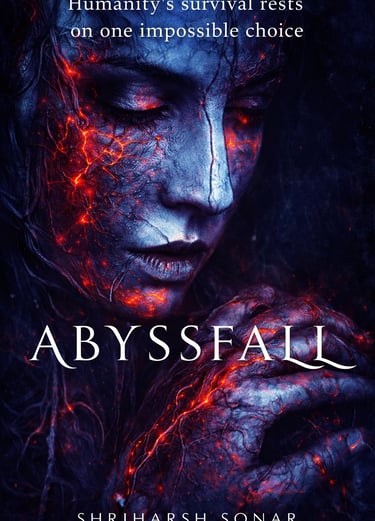
  • Abyssfall / Paatal Beej

Core Cinematic Ethos

Action must carry emotional cost.
Villains must reflect systems, not caricatures.
And no victory should arrive without consequence.

Long-Form & Serialized Narratives

Some stories cannot be contained within a single act.
When the material is generous and honest, time becomes an ally — not an excuse.

  • Before Dawn

  • Adrishya

  • Abyssfall / Paatal Beej

  • Rakt Darbar

These narratives are designed to sustain depth, character erosion, and systemic conflict across episodes — without repetition or artificial stretch.

All screen projects are in various stages of development, adaptation, or format exploration.

These stories are not imagined futures. They are already happening — just off-screen.