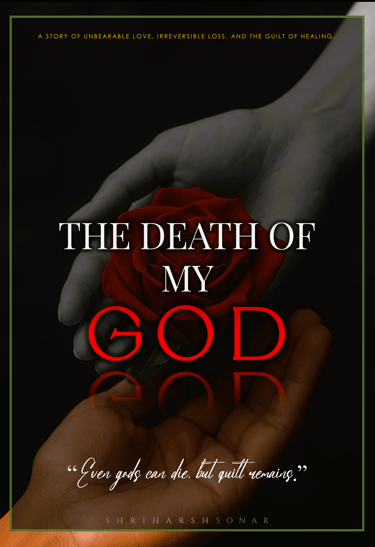
The Death of My God
How meaning collapses and is rebuilt internally
This is not a story about death.
It is a story about what happens when belief no longer protects you.
At its center is a man who once lived inside a love so complete it felt unquestionable — a marriage shaped by shared rituals, ordinary joys, children, and a quiet certainty that life, though imperfect, was fundamentally safe. When illness arrives without warning and takes everything with it, grief is only the beginning. What truly collapses is faith — in God, in fairness, in meaning itself.
What follows is not a dramatic breakdown, but a slower, more unsettling transformation. Responsibility replaces belief. Memory sharpens instead of softening. Silence becomes a form of survival. Life continues, but without the reasons that once made it sacred.
As time passes, unexpected presences enter, old truths surface, and accidental revelations threaten to dismantle what little stability remains. The story does not chase answers. It studies restraint — the moments when the human mind chooses not to know, not to ask, not to resolve. When meaning is rebuilt not through certainty, but through choice.
The Death of My God explores the fragile boundaries between faith, belief, trust, reality, and hope — and how the human mind often confuses them in moments of crisis. It is not a story about romance, nor about moving on. It is a story about permission: to live, to remember, to carry one love without destroying another.
Quiet, psychologically layered, and deeply human, this novel is for readers who understand that some losses do not end — they change form.